

What Is the Best Viewing Distance for LED Display?
The best distance for watching is all about finding the perfect spot where your eyes and the screen get along just right. When you're at this sweet spot, everything on the screen looks clear and easy to see, without making your eyes tired or making you squint to see the details. Finding this comfy spot is really important because it makes watching stuff better and keeps your eyes healthy too.
How Do We Calculate the Best Viewing Distance for LED Display?
Here’s a practical formula: Best Viewing Distance = LED Pixel Pitch × 1000 to LED Pixel Pitch × 3000 (in millimeters). "Pixel Pitch" refers to the distance between two neighboring pixels on an LED display, usually denoted as "P" followed by a number, such as P2.5, meaning the pixel pitch is 2.5mm.
For example, for an Indoor HD LED Display with a P2 pixel pitch, the best viewing distance is roughly between 2 meters and 6 meters. Similarly, for a DOOH LED Display Screen with a P5 pixel pitch, the ideal viewing distance falls between 5 meters and 15 meters. Within this range, viewers can enjoy clear imagery and a comfortable visual experience.
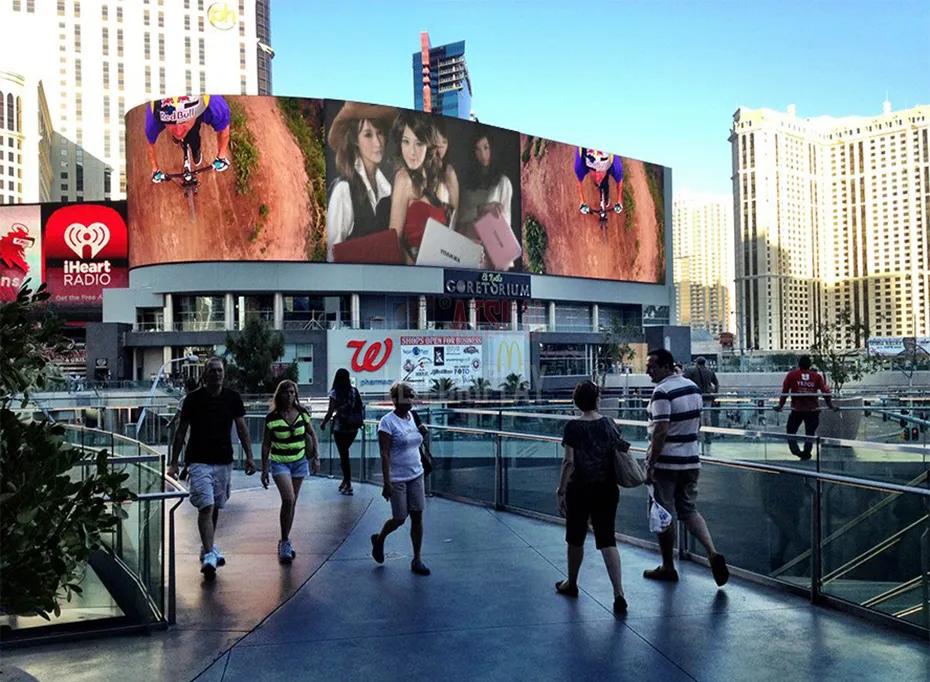
Of course, the best viewing distance isn't fixed. It's influenced by the screen's resolution, size, and the lighting conditions of the viewing environment. High-resolution screens (like Micro LED Display) and larger screens (like Outdoor LED Display) generally allow for a farther viewing distance, whereas bright lighting may necessitate a closer position to maintain clarity.
In the world of LED Display, the relationship between resolution and viewing distance is a critical factor. Resolution, as the key indicator of screen clarity, directly impacts our visual experience at various distances.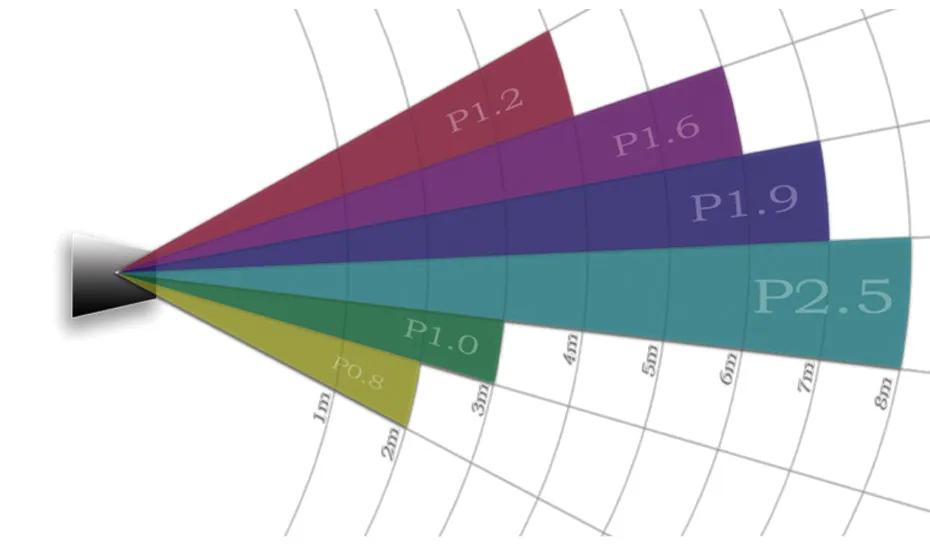
The Impact of Resolution on Viewing Distance
Resolution indicates the number of pixels a display can show in both horizontal and vertical dimensions. Higher resolution means more pixels per unit area, resulting in finer details. Thus, under the same pixel pitch and viewing conditions, a high-resolution LED display typically requires a closer optimal viewing distance.
For instance, a high-definition LED display (like 1920x1080) with high pixel density presents richer details. Audiences can enjoy a clear picture from a closer distance without experiencing blurriness or distortion. Conversely, lower-resolution screens demand a greater distance for a crisp visual effect.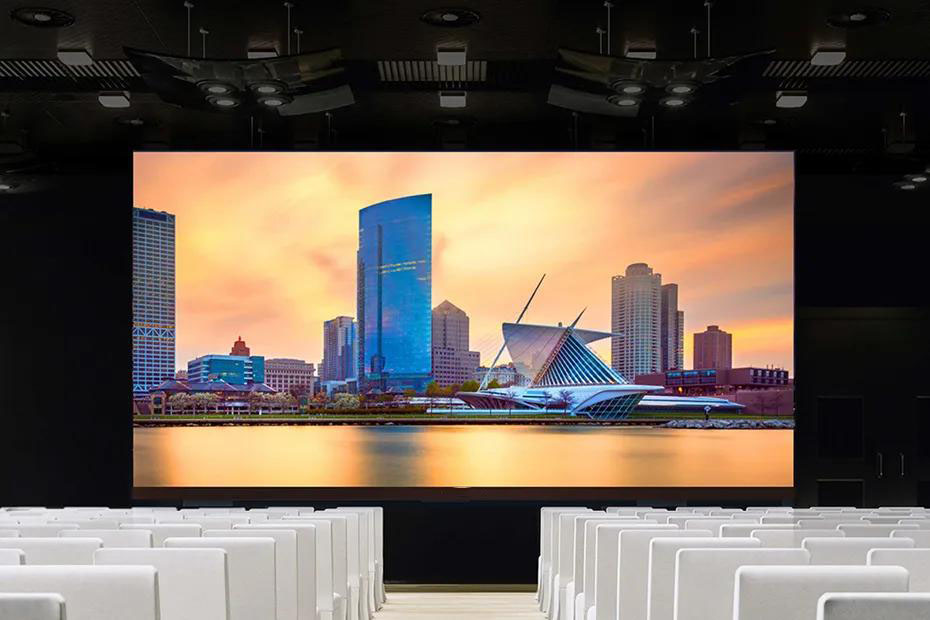
The Influence of Viewing Distance on Resolution Perception
Viewing distance is influenced by resolution but also affects how we perceive resolution. At the optimal viewing distance, the fine quality provided by high resolution becomes fully appreciable. Viewers can more easily discern fine details, such as the edges of letters and textures in an image.
However, if viewers are too far from the screen, even high-resolution details may blur due to the broadened viewing angle. Similarly, too close a position might undermine the advantages of high resolution, making it hard for the human eye to distinguish individual pixels.
Balancing Resolution with Viewing Distance
Creating an LED display system requires balancing resolution with viewing distance. Start by choosing a resolution that fits the application and viewing needs. Then, adjust the display's installation height, angle, and the surrounding lighting to optimize the audience's viewing position within the ideal range.
Advanced image processing technology, like scaling algorithms and sharpening, can further enhance the visual experience at different distances. These technologies can compensate for mismatches between resolution and viewing distance to some extent.
Conclusion
There's a close link between the resolution of LED Display and the best viewing distance. High resolution offers detailed imagery but requires a proper distance to appreciate fully, while the right viewing distance ensures that the advantages of high resolution are fully felt. When selecting and using LED Display, it’s vital to consider the balance between these two factors for the best visual experience.
It's worth noting that with the continuous advancement of LED display technology, such as higher definition, flexibility, and customization trends, pixel pitches are getting smaller, and resolutions higher (Micro COB LED Display has reached 0.6mm pitch), providing viewers with a more refined and lifelike visual experience. Meanwhile, the integration of smart and internet+ technologies (e.g., Smart street pole display screens) is bringing new growth opportunities to the LED display industry.